
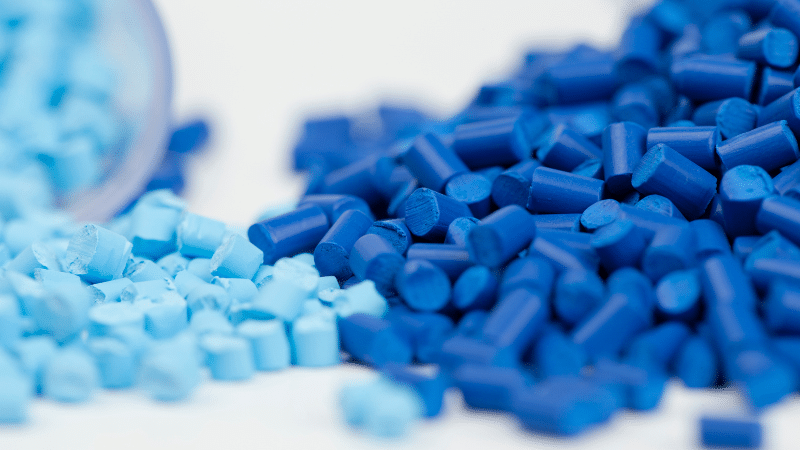
Medical Device Material Selection for Plastic Injection Molding
Material selection for medical device injection molding is one of the earliest decisions made by product designers. It shapes manufacturability, regulatory compliance, and long-term production success. Make the wrong call here, and it follows the project through tooling, validation, and beyond.
As a medical device design engineer, you do not need to identify the exact commercial grade of your material on your own. All you need to do is establish a clear material direction for your plastic injection molder before finalizing the design. That direction influences nearly every decision downstream.
Key Takeaways
- Material selection is an early DFM decision that affects medical device manufacturability, tooling, tolerances, validation, and regulatory compliance. Designers should establish a clear material direction before finalizing the part, even if the exact resin grade has not yet been selected.
- Material requirements should be defined across mechanical, thermal, chemical, and visual needs. Service conditions, sterilization methods, chemical exposure, transparency, surface finish, and other functional demands should be evaluated before choosing a resin family.
- A “medical grade” designation alone does not establish the biocompatibility of a finished device. Designers must review documentation for the specific resin grade, including additives and colorants, and confirm suitability for the device’s intended contact conditions and sterilization method.
- Material behavior also influences shrinkage, warpage, and dimensional stability, which can affect assembly fit, sealing, and specification compliance. Actual performance varies by resin grade, geometry, reinforcement, gate location, processing conditions, and other molding factors.
- Material availability, documentation, traceability, cost, and long-term supply should be considered before validation because post-validation substitutions can require additional testing or revalidation. Injection molders can help assess processability, geometry suitability, anticipated shrinkage, sourcing, and production consistency before tooling begins.
Why Material Selection Is an Important DFM Decision?
Material selection is one of the earliest and most consequential DFM decisions in medical device injection molding. The material you specify influences flow and shrinkage, mechanical strength, aesthetics, and whether tight tolerances are achievable in production. Each of these tooling decisions is affected by how the selected resin behaves during molding.
Material choice also affects validation scope. Once a material is incorporated into the approved device design and manufacturing process, changing it is no longer a simple substitution. Depending on the impact of the change, additional testing, documentation, or validation may be required. Selecting the right material direction early protects both the tooling investment and the validation timeline.
What Designers Should Evaluate First?
The right material selection starts with asking the right questions about how the injection-molded medical device will be used. That’s where most projects go wrong when teams jump to resin selection before working through each requirement category.
Mechanical Requirements
Start by defining what the component needs to withstand in use before settling on a material direction. A snap-fit housing, a structural bracket, and a wear component impose very different demands on a resin. Your molder and material supplier can then evaluate properties such as impact resistance, stiffness, fatigue, creep, and friction against those requirements.
For example, a structural component may require greater stiffness, while a snap-fit may need a better balance of flexibility, fatigue resistance, and impact performance. For wear-prone components such as cams or guide channels, polyoxymethylene (POM) may be considered for its low-friction and wear-resistant properties.
Thermal Requirements
Before finalizing the material direction, define the component’s expected service temperature and the sterilization method required by the product. These conditions need to be reviewed together because a material that performs well in normal use may not tolerate the required sterilization process.
For example, typical ABS grades are generally unsuitable for repeated steam autoclaving at 121°C to 134°C, whereas healthcare grades of polyphenylsulfone (PPSU) can withstand repeated steam sterilization. Exact performance depends on the specific resin grade and sterilization conditions. For EtO sterilization, thermal limits are generally less demanding, while ethylene oxide residuals and required aeration become important considerations.
Chemical Requirements
Chemical exposure needs to be defined early because disinfectants, cleaning agents, drugs, and bodily fluids can interact with polymer chemistry in different ways. Polycarbonate, for example, can be susceptible to environmental stress cracking when exposed to certain chemicals, particularly when the part is under residual or applied stress.
For parts in contact with biologics or bodily fluids, chemical compatibility data from the injection molding material supplier is required. General polymer classifications are insufficient; identify the fluids and cleaning agents the component may encounter so compatibility can be reviewed against the specific resin grade.
Visual Requirements
Transparent housings generally require amorphous resins such as polycarbonate (PC), glycol-modified polyethylene terephthalate (PETG), or cyclic olefin copolymer (COC). Semi-crystalline materials are generally more opaque or translucent than amorphous resins because their crystalline regions scatter light. For colour-matched parts, confirm the colorant’s compatibility with both the base resin and the sterilization method.
Before tooling, define your surface finish and cosmetic expectations and review them with your injection molder, since different materials can respond differently to mold polish, texture, gloss, and optical requirements.
Working through all four categories produces a defensible material selection rather than a default one. That selection is the right starting point for a conversation with your molder.
Medical Device-Specific Regulatory Considerations
Functional performance can get a device to prototype, whereas regulatory compliance gets it to market. Material selection intersects both, and the regulatory dimension is where design teams most commonly underestimate the scope of the work.
Biocompatibility and Material Suitability
For materials associated with direct or indirect patient or user contact, biological safety requirements should be evaluated according to the nature and duration of contact, material composition, intended use, and the applicable ISO 10993-1 framework.
Selecting a resin described as “medical grade” does not, by itself, demonstrate the biocompatibility of the finished device. Materials such as PC, PPSU, PEEK, and COC are available in grades supported by biocompatibility data. Designers should still review the documentation for the specific grade selected and confirm that it is appropriate for the device’s intended use.
Key Note: Additives, colorants, and other formulation changes can alter a material’s biological safety profile. They should therefore be evaluated before the material selection is finalized.
Sterilization Compatibility
Before finalizing the material selection, confirm the intended sterilization method and expected number of exposures. EtO is broadly compatible but requires adequate aeration time. Gamma irradiation can cause yellowing or embrittlement in some polymers and grades, depending on the radiation dose and formulation.
Autoclave sterilization requires a material capable of withstanding the specified combination of heat, moisture, and repeated exposure. Gamma and e-beam sterilization can also affect polymer properties differently depending on the resin grade and exposure conditions, so compatibility should be confirmed before the material is finalized. If the sterilization method remains undecided, flag it as an open item before tooling begins.
Traceability, Documentation, and Consistency
In regulated production, material identification, supplier documentation, and applicable lot traceability records must support the device manufacturer’s quality and production requirements. Your molder must have access to a consistent, well-documented supply.
Healthcare or medical grades may also provide additional support such as formulation consistency, change-notification programs, biocompatibility documentation, and long-term supply commitments. Process validation is run against a specific material specification, not a material category.
Post-Validation Material Changes
Changing the injection molding resin after design freeze or process validation is not a routine update. Depending on the impact of the material change, additional testing, documentation, verification, or revalidation may be required.
In many projects, this can add significant time and unplanned cost. Locking material direction early, even before the exact commercial grade is confirmed, helps protect the validation timeline.
Shrinkage, Warpage & Dimensional Stability
You do not need to calculate mold shrinkage yourself, but your material direction matters because different resin families can behave very differently once they enter the mold.
In medical device components, dimensional variation directly affects assembly fit, sealing performance, and compliance with device specifications. Shrinkage rate and direction vary by polymer type.
Amorphous resins such as PC and PSU generally exhibit lower and more predictable molding shrinkage than many semi-crystalline resins. Semi-crystalline resins such as PP and PEEK typically exhibit greater shrinkage and can shrink differently in the flow and transverse directions, increasing the risk of warpage in certain geometries. Glass fiber reinforcement can improve dimensional stability but may introduce directional shrinkage depending on fiber orientation.
The table below provides general reference ranges across common material categories.
| Material Type | Example Resins | Typical Shrinkage Rate | Warpage Risk | Dimensional Stability |
|---|---|---|---|---|
| Amorphous | PC, ABS, PSU, PPSU | 0.4% – 0.8% | Low | High |
| Semi-Crystalline | PP, PA, POM, PEEK | 1.0% – 2.5%+ | High | Variable |
| Glass-Filled (Amorphous) | PC-GF, PSU-GF | 0.2% – 0.5% | Low to Medium | Improved stability, minor anisotropy |
| Glass-Filled (Semi-Cryst.) | PA-GF, PP-GF, PEEK-GF | 0.3% – 0.9% | Medium | Better than unfilled, still direction-sensitive |
| Unfilled Semi-Cryst. | Homopolymer PP, POM | 1.5% – 3.0% | High | Requires careful tool design and process control |
Disclaimer: These figures are reference values. Actual shrinkage varies by resin grade and can be affected by part geometry, wall thickness, flow direction, gate location, mold temperature, and processing conditions. Use supplier data for the specific grade as a starting point and review anticipated shrinkage with your molder before tool design begins.
Global Supply & Long-Term Availability
Single-source resins introduce supply risk that is difficult to manage across multi-market device registrations.
Production volume and material cost should also be considered before a resin is finalized. Some specialty or high-performance grades may have minimum order requirements, longer lead times, or higher material costs, making them appropriate for one production volume but impractical for another.
For devices sold in the US, Canada, Europe, and Latin America, select resins with documentation that can support the applicable regulatory requirements for the device, including FDA biocompatibility guidance and the EU Medical Device Regulation (MDR).
Globally supported materials from established manufacturers can reduce the risk of unplanned substitutions by providing stronger continuity-of-supply, change-notification, and documentation programs. If a specified grade does become unavailable, any replacement material still needs to be evaluated for its potential impact on the device and manufacturing process.
What We Help Validate as the Molder?
When a designer brings us a material direction, we evaluate it from a manufacturing perspective before tooling begins. This helps identify potential issues early, reduce downstream risk, and ensure the selected material is suitable for the part, process, and production requirements.
As part of this review, we assess several factors that can directly affect manufacturability and production consistency:
- Processability: We assess resin compatibility with injection press capabilities, tool configuration, and cycle-time targets. Materials with narrow processing windows or moisture sensitivity require specific handling before production begins.
- Suitability for part geometry: We identify where a material may struggle with fill, sink, or dimensional hold, given wall thickness variation, thin sections, or long flow paths.
- Likely shrinkage behavior: We anticipate dimensional changes before tool steel is cut, particularly in snap fits and sealing surfaces.
- Material sourcing and consistency: We confirm availability, documentation level, and lot traceability against your production classification. Sourcing risks are flagged early.
This is how we ensure your material choice holds up long before production begins.
Designer Takeaway
Start your material selection process for medical device injection molding by defining your functional, thermal, chemical, and regulatory requirements. Then review the manufacturing implications with your molder before the material and part design are finalized.
If you are working through tooling or material selection for a medical device, bring us in before the design is finalized. Share your functional requirements, sterilization needs, compliance constraints, and material direction. We can evaluate the manufacturing implications and help you narrow the selection before tooling begins.

About Jack McDonald
Jack McDonald is the President of PreciKam, a leading North American precision plastic injection molding manufacturer based in Baie-d’Urfé, Quebec. With over three decades of industry experience, Jack is dedicated to producing quality precision molded plastic parts crucial to health and safety in the medical, automotive, and food sectors.




Follow Us